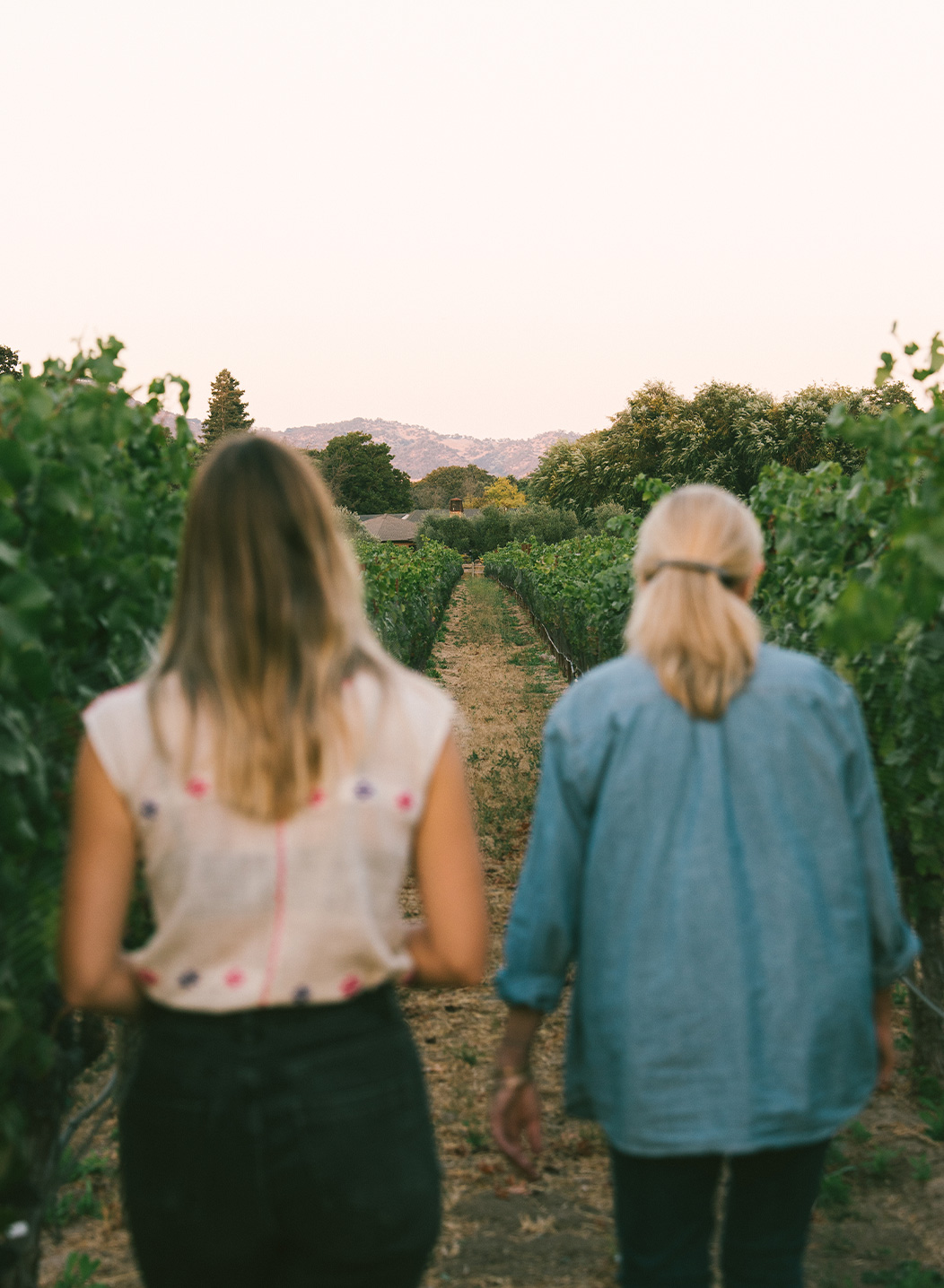
Welcome to Blue Farm Wines
Blue Farm began as a seven-acre vineyard divided into four blocks to create one complete wine. Today, it includes Grand Cru style Pinot Noir and Chardonnay from five vineyards and five AVAs within Sonoma County. Our focus has always been on farming and therefore cultivating a deep connection with the land.
Anne Moller-Racke helped Donum become one of the top Pinot houses in Carneros. Now she helms her own label.
Kim Marcus, Senior Editor at Wine Spectator
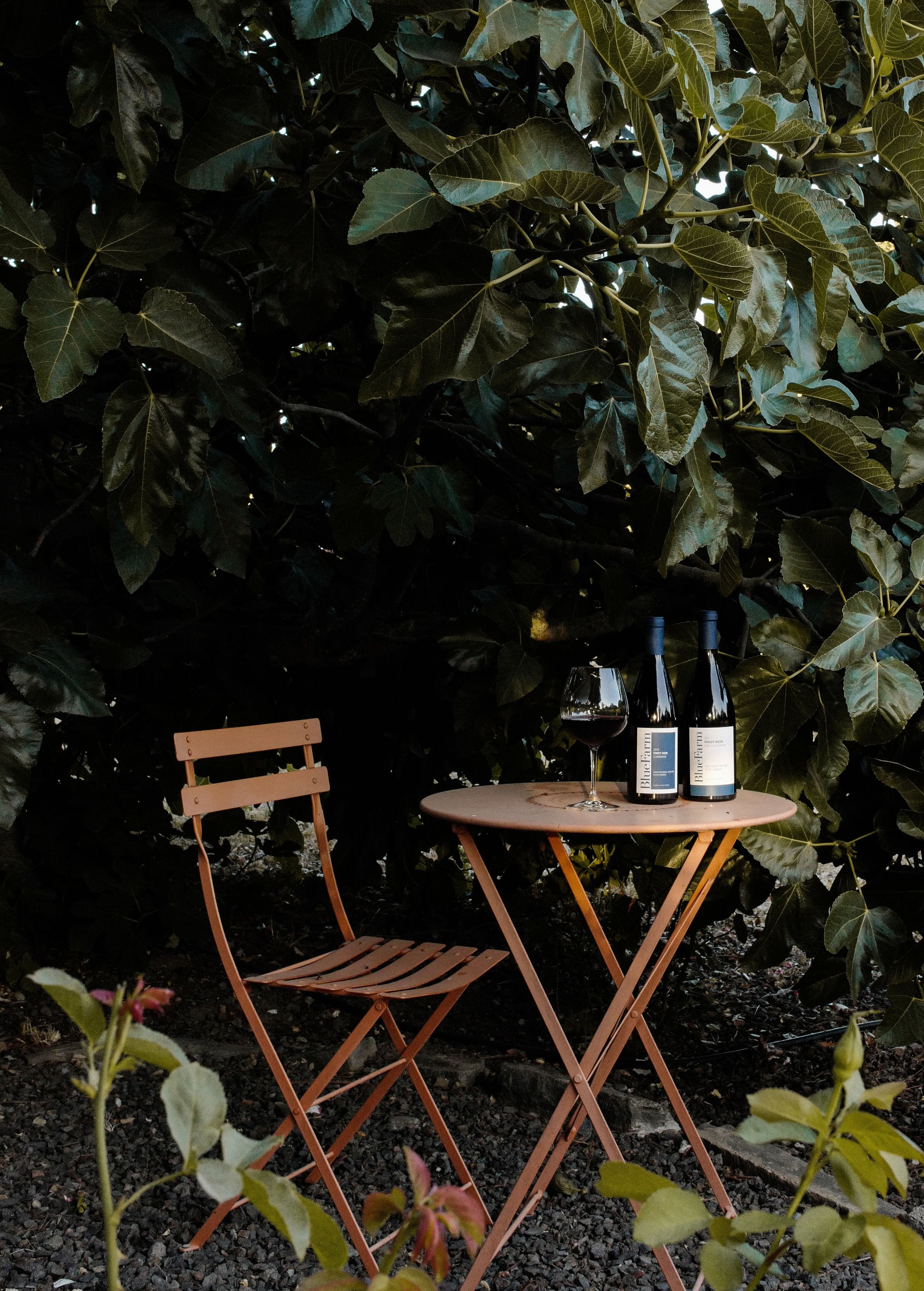
Our Wines
The vintage of a wine is a story in a bottle; the story of the growing season from bud break to harvest, with the last 30 days before harvest being the most meaningful. However, the weather during flowering has a larger effect on quantity and is often the first indicator for quality. Every year we try to capture the voice of the vintage. Knowing our sites well, we use our tools wisely, from crop thinning to irrigation, to bring out intensity and grace.
Accolades

2019 Pinot Noir, Farmhouse, Anne Katherina Vineyard, CarnerosFloral and complete in tension and energy, this is a high-acid, brightly fruited wine, complex in every way. Moderate concentration binds it to a robust structure and sinewy tannins, with impressive length and finesse.
Wine Enthusiast
2019 Chardonnay, Laceroni Vineyard, Russian River ValleyFresh and juicy, showing green apple, Meyer lemon and tangerine flavors at the core, with notes of grated ginger and sea salt on a firm, structured frame, followed by a long, crisp and expressive finish.
Wine Spectator
2019 Pinot Noir, Farmhouse, Anne Katherina Vineyard, CarnerosVery much fitting in with its same-winery companions from the 2019 vintage, Blue Farm’s latest Farmhouse edition is a rich and generously filled Pinot that does not stint on ripeness or fruit. It is weighty without seeming in the least bit heavy or unbalanced, yet it does betray a slight catch of heat at the finish, but, even then, its fruit is continuous. It is decidedly tasty now and age is less a necessity than a means by which the wine might reveal a little more range and complexity.
Connoisseurs' Guide to California Wine
2019 Chardonnay, Laceroni Vineyard, Russian River ValleyThis offers lifted notes of citrus, wet stone and crisp green apple. The well-integrated oak gives it a touch of richness and enduring structure that remains balanced and layered throughout. Enjoy 2026–2029. Cellar Selection. —Virginie Boone
Wine Enthusiast
2019 Pinot Noir, Gap's Crown Vineyard, CarnerosLush, plush and full-bodied in style, this coastal wine delivers layers of baked and dry fruit flavor, alongside dried herb, fig and forest. Intensely built and structured to last, it has a lasting elegance beneath the bluster. — Virginie Boone
Wine Enthusiast
2019 Pinot Noir, Gap's Crown Vineyard, CarnerosShows a solid core of red and black cherry fruit, along with sparkles of anise, red tea and savory. Reveals a subtle sheen of spicy toast on the finish. This has a nice streamlined feel overall. Drink now through 2028.
Wine Spectator
2019 Pinot Noir, Gap's Crown Vineyard, CarnerosThere is a sense of more extract at work here when this wine is compared to its mates starting with its dark fruit aromas and continuing on into its deep and juicy, very well sustained flavors, and, if at no point over-sized or wanting for varietal precision, this is a somewhat broader-shouldered Pinot Noir of ample ripeness and size. It shows good promise for age by way of its structure yet it does not demand lengthy cellar time, and, by dint of its ready richness, it will turn the trick nicely in the shorter term with a classic cassoulet.
Connoisseurs' Guide to California Wine
Accolades
Become a Member
We created our Guaranteed Allocation Program to ensure complete access of our wines to a small group of wine lovers. Choosing to work with low-yielding, high quality vineyards limits our case production, resulting in an average of 250 cases or less of each wine. This provides us with the unique opportunity to make interesting and age-worthy Sonoma Pinot Noirs and Chardonnay to share.